Search Tyre
How to Check Tyre Tread at Home Before Driving
Checking tyre tread at home is a useful first step before a long journey, a seasonal change or a visit to a tyre workshop. Park on level ground, apply the handbrake and allow the tyres to cool if the vehicle has just been driven. Turn the steering wheel slightly when necessary so you can see the inner shoulder, then inspect the main grooves across the full width of each tyre. Look for raised wear bars inside the grooves. If the tread is level with them, the tyre is heavily worn and should not be judged by appearance alone.
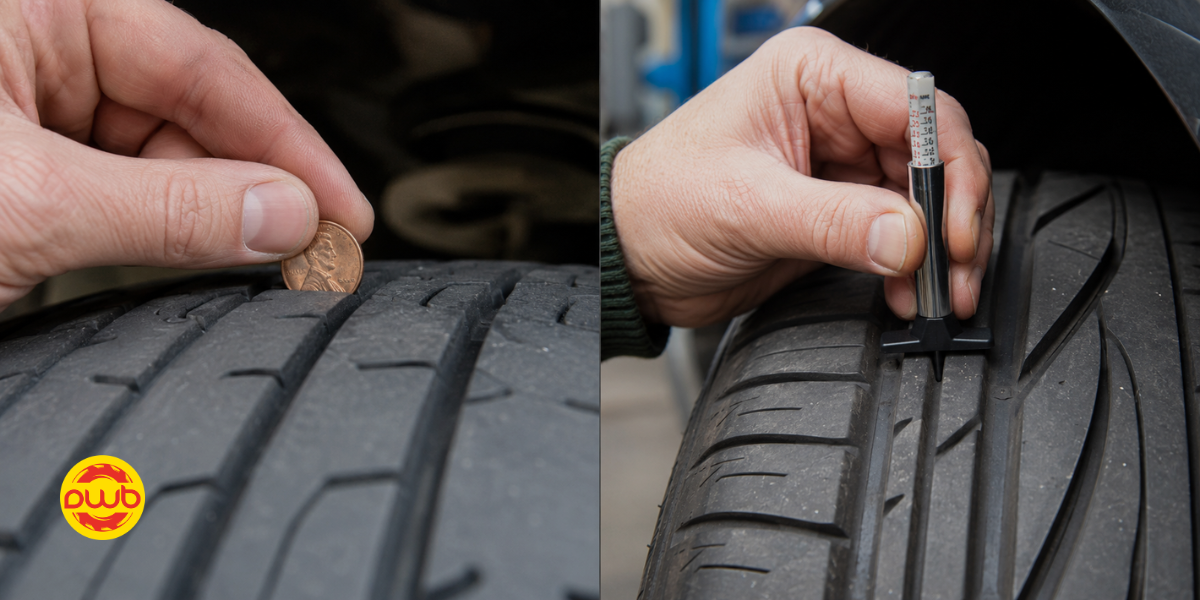
For a quick Check Tyre Tread inspection, place a coin into a main groove and compare how far the tread covers it. This can warn you that the tread is low, but it is not an exact measurement. A tread depth gauge gives a more useful result. Take readings in several grooves at the centre, inner and outer parts of the tread, then record the lowest reading rather than the most favourable one.
Uneven wear may point to incorrect pressure, wheel alignment or suspension problems. Cracks, bulges, cuts, exposed cords, vibration or repeated air loss also need professional attention. A home inspection helps you understand the tyre’s condition, but it does not replace a complete safety check when damage or unusual wear is present.
How to Check Tyre Tread at Home
01
Check Wear Bars
Look inside the main grooves. If the tread is level with the wear bars, the tyre needs professional inspection.
02
Use a Coin
Place a coin in the tread groove as a quick warning check. This method is useful, but it does not give an exact measurement.
03
Use a Tread Gauge
Measure different grooves and areas of the tyre. The lowest reading is the most important result.
Important: Cracks, bulges, uneven wear, vibration or repeated air loss require inspection by a qualified tyre technician.
Home Tyre Tread Checks and When Advanced Testing Helps
The first home inspection is valuable because it gives you a clear starting point, but different methods answer different questions. Wear bars show how close the tread is to the built in replacement reference. A coin test is convenient when you have no tools, although its result depends on the coin and the angle at which it is placed. A manual or digital tread gauge is more suitable when you need a number that can be compared across tyres.
Advanced testing is useful when the tread looks uneven or the vehicle does not feel normal. A technician can measure several areas more consistently and examine whether the wear pattern is linked to pressure, alignment, balancing, suspension or a damaged tyre. This does not mean every Check Tyre Tread inspection requires expensive equipment. For ordinary tread depth, a good gauge and careful technique are often enough. Advanced equipment becomes more valuable when the readings differ sharply, one shoulder is worn, the steering pulls or vibration is present.
The most useful information comes from combining both levels of checking. Home checks help you notice change early and explain what you have seen. A professional inspection can then confirm the cause and advise whether adjustment, repair or replacement is appropriate. At DWBtyres , this practical approach helps drivers choose advice based on the tyre’s actual condition instead of relying on appearance or a single quick test.
How to Measure Tyre Tread Depth Correctly
Measuring tyre tread depth correctly starts with choosing the right part of the tread. Do not place a gauge on a raised tread block, a groove edge or a stone trapped in the channel. Put the measuring tip into a main groove and keep the gauge upright so the base rests evenly on the tread surface. Repeat the measurement at several points around the tyre, including both shoulders and the centre. Record each result and use the lowest reading when deciding whether further action is needed.
Wear Bars, Coin Tests and Tread Gauges
The wear bar method is the fastest visual check. These small raised sections sit inside the main grooves and provide a useful warning when the surrounding tread has worn down to their level. The coin method is helpful for a quick home screening, but it should be treated as an indication rather than proof that a tyre is safe. A tread gauge is the better choice when the result is close to the wear bars or when two tyres appear different.
Check Tyre Tread readings should also be compared across the axle. A difference between the left and right tyre can indicate uneven wear, pressure problems or alignment concerns. The image below shows the type of close measurement involved, but a single image cannot replace measuring your own tyres in several locations. If the gauge readings are confusing or the rubber is damaged, stop relying on home tests and arrange a professional inspection.
Practical Tips for a More Reliable Tread Check
Small details can make a home tread inspection more reliable. Measure when the tyres are cool, ideally before driving or after the vehicle has been parked long enough to lose the heat created by road use. Check the inflation pressure with a suitable gauge and compare it with the vehicle manufacturer’s recommendation. A visibly underinflated or overinflated tyre can change the contact patch and may explain uneven wear, so do not ignore pressure while judging tread condition.
Keep the vehicle safely parked on firm, level ground. If you need to inspect the inner shoulder, use the steering angle only when it gives you a safe view, and never place any part of your body beneath a vehicle supported only by a jack. Wipe dirt from the tread before measuring, remove loose stones carefully and avoid taking a reading on a groove blocked by debris.
A good Check Tyre Tread habit also means looking at all four tyres, not only the one that appears worn. Compare the shoulders, centre ribs and groove depth, then note any change over time. Repeat the check before a long trip, after hitting a pothole or when the steering, ride or noise feels different. If you are looking to buy car tyres in Dubai , accurate measurements and a clear description of your driving conditions will make professional advice more useful.
What Your Tread Check Can and Cannot Tell You
Home tread checks are useful and can be trusted as a preliminary assessment when they are performed carefully. Wear bars help identify serious visible wear, a coin provides a quick warning and a tread gauge gives the most dependable home measurement. However, none of these methods can fully assess internal damage, rubber ageing, alignment, balancing or suspension condition. The result should therefore be treated as evidence for the next decision, not as a complete safety certificate.
There is no benefit in repeating the same coin test many times during one inspection. It is more useful to measure several points with the same gauge and repeat the check when the vehicle has covered more distance, experienced unusual handling or completed a demanding journey. Regular visual checks and occasional measurements help reveal gradual changes before they become obvious on the road.
The main lesson from Check Tyre Tread is simple. Inspect the whole tyre, measure more than one point, compare wear across the axle and take damage seriously even when tread remains. If the readings are very low, inconsistent or difficult to interpret, ask a qualified technician to assess the tyre. A suitable car service in Abu Dhabi can also investigate alignment, balancing and other causes of uneven wear when a tread check reveals a wider problem.
FAQ: How to Check Tyre Tread at Home
What is the easiest way to check tyre tread at home?
The easiest method is to inspect the tread wear indicators and use a tread depth gauge. Check the main grooves across different parts of the tyre rather than measuring only one area. A visual inspection can identify obvious wear, but a gauge gives a more reliable reading.
Can I use a coin to check my tyre tread depth?
A coin test can provide a quick warning that the tread may be low, but it is only an approximate check. It cannot replace a tread depth gauge because it does not provide an exact measurement. Use a gauge or arrange a professional inspection if the tread appears close to the wear indicators.
How should I use a tread depth gauge correctly?
Place the gauge into the main tread groove and measure several points across the tyre. Repeat the process at different positions around the tyre and record the lowest reading. Measuring multiple locations helps identify uneven wear that may not be visible from one measurement.
Can a tyre be unsafe even if it still has enough tread?
Yes. Cracks, bulges, exposed cords, uneven wear, damaged sidewalls, repeated air loss or an old rubber compound can make a tyre unsafe even when the tread appears acceptable. A tread measurement should therefore be combined with a complete visual inspection.
When should I have my tyres checked by a professional?
Arrange a professional inspection if the tread readings vary significantly, the vehicle pulls to one side, the steering wheel vibrates, unusual tyre noise develops or the tyre shows cracks and bulges. Advanced equipment is not usually necessary for tread depth alone, but it can help identify alignment, balancing and other issues affecting tyre wear.