Search Tyre
September 21, 2026
Pirelli vs Bridgestone Tyres: Which One Is Better?
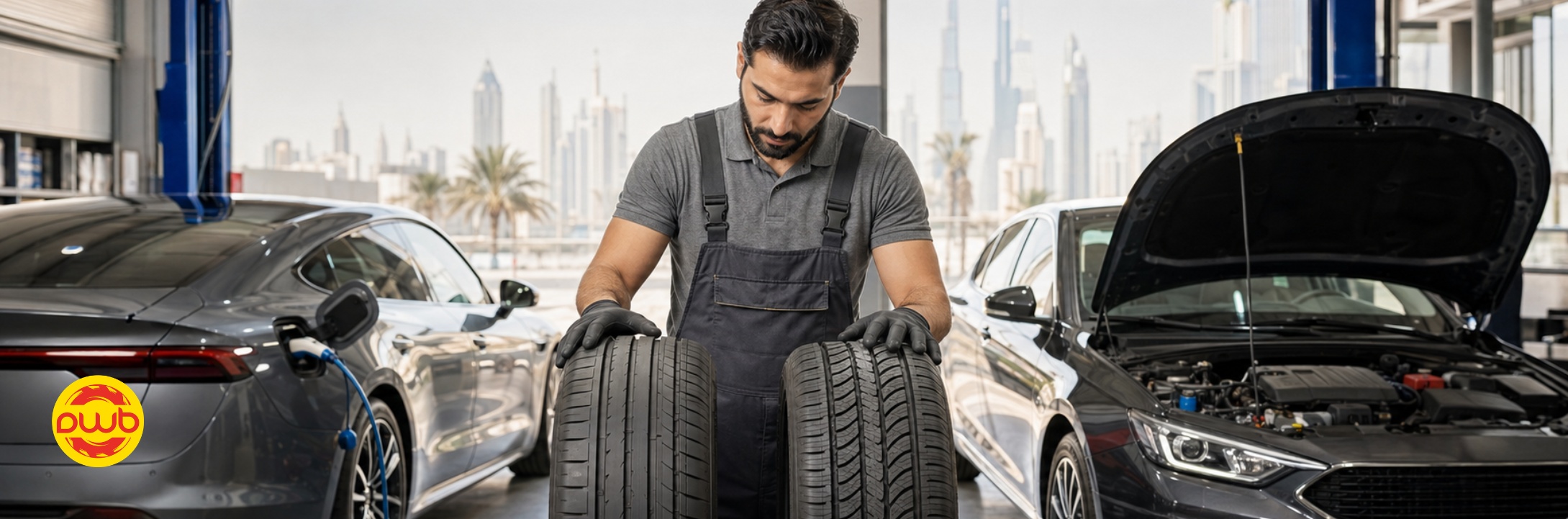
The main difference begins with weight. Large battery packs can make many electric cars heavier than similarly sized petrol or diesel vehicles. That extra weight increases the load carried by each tyre, especially during braking, cornering and carrying passengers or luggage.
Electric motors also deliver torque immediately. A petrol engine usually builds power progressively, while an electric motor can apply strong acceleration as soon as the driver presses the accelerator. This places greater stress on the tread and can cause faster wear if the driver regularly uses hard acceleration.
Regenerative braking also changes the way an electric car slows down. Instead of relying only on the brake discs and pads, the motor helps recover energy and decelerate the vehicle. This can create different wear patterns, making tyre rotation, alignment and regular inspections particularly important.
EV tyres usually focus on four main areas: load capacity, wear resistance, rolling resistance and noise reduction.
Because electric cars can be heavier, their tyres may require a higher load rating or reinforced construction. Some vehicles use XL or HL specifications, but these markings should never be selected without checking the vehicle’s recommended fitment.
The tread compound and internal structure may also be developed to cope with instant torque. This does not mean every EV tyre will last longer than every regular tyre. Driving style, alignment, pressure, road surface and vehicle weight still have a major effect on tyre life.
Rolling resistance is another important factor. A tyre that rolls more easily requires less energy to maintain speed. On an electric car, this can help support battery efficiency and driving range. However, low rolling resistance should not come at the expense of the grip and braking performance required by the vehicle.
Electric cars are also quieter because they do not have the same engine and exhaust noise as combustion vehicles. As a result, road noise becomes more noticeable inside the cabin. Many EV tyres use tread designs or sound-absorbing technology to create a quieter driving experience.
In some cases, yes. The word “regular” does not automatically mean that a tyre is unsuitable for an EV. If the tyre matches the vehicle’s exact requirements, it may be suitable.
Before fitting a regular tyre to an electric car, check:
High temperatures do not automatically make regular tyres unsafe, but they leave less room for poor maintenance or incorrect selection. Hot roads, long highway journeys and heavy traffic can increase the working temperature of the tyre.
Tyre pressure is especially important. Pressure should be checked when the tyres are cold, before driving or after the car has been parked for several hours. The correct pressure is found on the vehicle’s door sticker or in the owner’s manual, not on the maximum-pressure figure printed on the tyre sidewall.
Drivers should not release air simply because the pressure appears higher after driving. Tyre pressure naturally increases as the tyre warms up. Reducing it while the tyre is hot can leave it underinflated once it cools, increasing flexing, rolling resistance and heat build-up.
Bridgestone recommends checking tyre pressure regularly and before long trips, while Michelin advises checking pressure when the tyres are cold for a more accurate reading. Bridgestone,
Tyres cannot create extra battery capacity, but they can influence how efficiently the vehicle uses its available energy. A tyre with lower rolling resistance requires less energy to move across the road. This can support driving range, particularly during steady city or highway driving. The effect depends on the vehicle, tyre size, tread design, pressure, road surface, temperature and driving style.
Wider tyres, aggressive performance compounds and incorrect pressure can all increase rolling resistance. These choices may improve grip or handling in certain situations, but they can also affect efficiency.
Drivers should be careful with claims that a particular tyre will add a fixed number of kilometres to every EV. No single range improvement applies to all vehicles. A tyre that performs well on one electric car may produce a different result on another model because of differences in weight, wheel size, suspension and software.
Start with the vehicle, not the tyre brand. Check the make, model, year, wheel size, front and rear specifications and the recommended load and speed ratings.
Next, decide what matters most for your driving. A driver who mainly uses the car in the city may prioritise comfort, quietness and efficiency. Someone who regularly travels on UAE highways may place greater importance on heat performance, stability and long-distance durability. A high-performance electric car may require a tyre capable of handling stronger acceleration and cornering forces. For professional guidance, contact DWB Tyres.
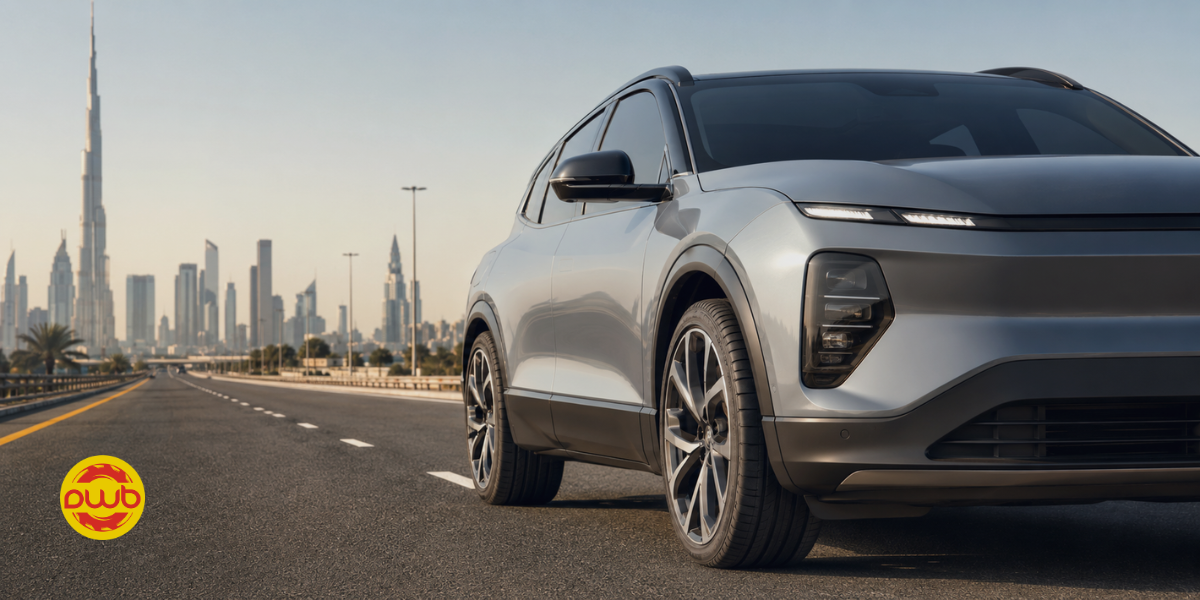
Choosing the right EV tyres starts with the vehicle, not the brand. Confirm the make, model, year, wheel size, front and rear specifications, load index, speed rating and any manufacturer approval. Then consider your driving conditions: city drivers may prioritise quietness, comfort and efficiency, while highway drivers need stable, durable tyres suited to long distances and high temperatures. High-performance EVs also require stronger grip and cornering control to handle instant torque and rapid acceleration.
Choosing between EV and regular tyres in the UAE is not simply about the label on the sidewall. The safest option is the tyre that matches your vehicle’s exact size, load index, speed rating, pressure and manufacturer requirements. EV-specific tyres can improve comfort, efficiency, noise control and durability, but a regular tyre may also be suitable when correctly approved. When you are ready to Buy car tyres in Dubai, proper inflation, wheel alignment and regular inspections are essential for maintaining safe and reliable performance.
EV tyres are designed to handle the additional weight, instant torque and quieter cabin of electric vehicles. They often feature lower rolling resistance, reinforced sidewalls and tread patterns designed to reduce road noise and improve driving range.
Electric vehicles do not always require a tyre labelled specifically for EVs, but the tyre must meet the vehicle manufacturer’s recommended size, load index and speed rating. EV-specific tyres can provide better efficiency, comfort, durability and stability.
Regular tyres may be suitable if they match the electric vehicle’s specifications. However, tyres with low rolling resistance, strong load capacity and improved heat resistance are usually a better choice for UAE conditions and the higher torque of EVs.
Look for low rolling resistance, strong sidewalls, the correct load index, suitable speed rating, reduced road noise and reliable performance in high temperatures. Always check the recommended specifications in the vehicle owner’s manual or door placard.
Tyre lifespan depends on driving style, vehicle weight, tyre quality, road conditions, inflation pressure and wheel alignment. The instant torque of an EV can increase tread wear, so regular pressure checks, alignment inspections and tyre rotation can help extend tyre life.