Search Tyre
September 21, 2026
Pirelli vs Bridgestone Tyres: Which One Is Better?
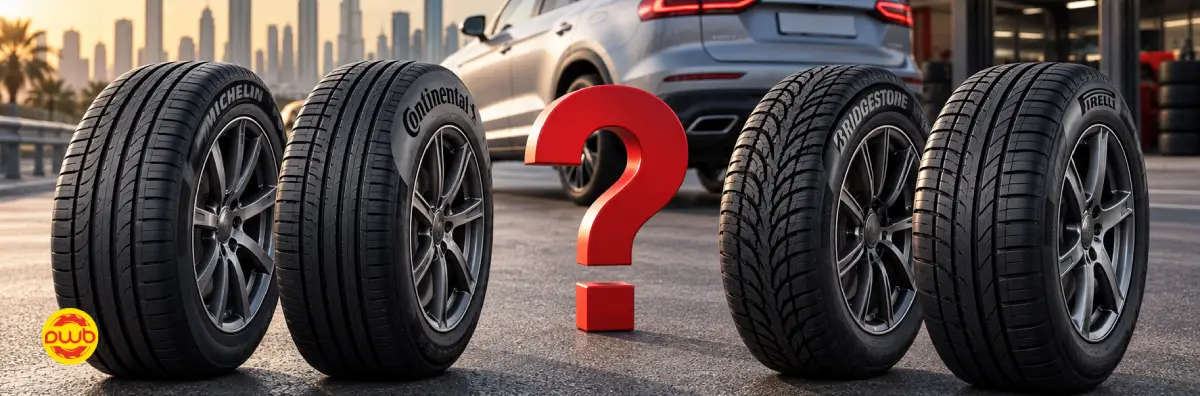
Yes, but mixing different tires is not always a good idea. In some vehicles, different tire brands can be used on the front and rear axles, provided the tire specifications are correct and the vehicle manufacturer allows it. However, mixing different tires on the same axle is generally not recommended because differences in tread design, grip, rolling characteristics and dimensions can affect vehicle stability and handling.
The safest setup is to use four matching tires whenever possible. If you need to replace only two tires, keep the same tire model on each axle and check the vehicle manufacturer's requirements before fitting them. Read More on Dwb Tyres blog.
In some cases, yes.
For example, a vehicle may have one tire brand on the front axle and another brand on the rear axle. This can be acceptable when both sets meet the vehicle's required specifications and are correctly fitted. Michelin specifically notes that different brands can be fitted at the front and rear.
However, this does not mean that mixing brands is the preferred option.
Different tire models can have different tread designs, compounds, handling characteristics and rolling behaviour. These differences may become noticeable during braking, cornering or wet-road driving.
Continental therefore recommends using the same brand, size, tread pattern, load index and speed rating across the vehicle whenever possible.
If you are buying new tires, choosing a complete matching set is usually the simplest way to keep the vehicle's handling predictable.
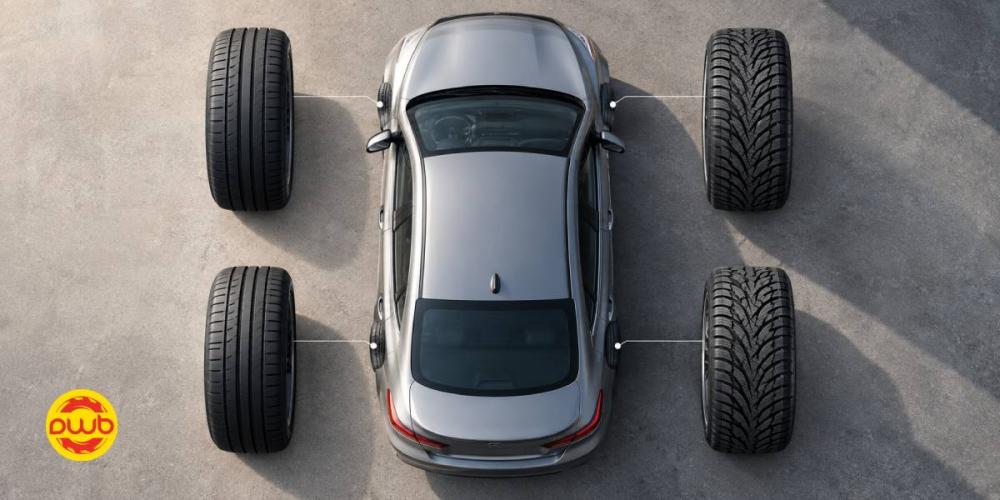
This is where you should be much more careful.
Mixing different tire brands or models on the same axle is generally not recommended.
The two tires on the same axle should ideally match in:
The reason is simple: the left and right tires need to behave consistently when the vehicle accelerates, brakes and turns.
Even when two tires have the same printed size, their actual dimensions, tread characteristics and rolling circumference can differ between models. Michelin notes that differences in circumference between the left and right tires can affect rotation speed and vehicle systems such as electronic stability control and indirect tire-pressure monitoring.
The main concern is not simply the brand name.
It is the difference in how the two tires interact with the road.
One tire may have:
That can create different levels of grip between the left and right sides of the axle.
During braking or cornering, the car may therefore respond differently from what the driver expects.
This is why replacing one tire with a completely different model should not be treated as a simple matter of matching the size printed on the sidewall.
Sometimes, yes.
If one tire is damaged and the other tire on the same axle is still relatively new and has very similar tread depth, replacing only the damaged tire may be reasonable.
But if the remaining tire is significantly more worn, installing one brand-new tire beside it creates a large difference in tread depth.
Michelin recommends assessing the difference in tread depth before deciding whether one tire or both tires on the axle should be replaced.
A tire professional should also check:
So the correct answer is not simply "always replace one" or "always replace two."
The condition of the other tire matters.
When two tires on the same axle need replacement, fitting the same tire model as a pair is generally the better approach.
This keeps the left and right sides of the axle more consistent in terms of tread pattern, grip and rolling characteristics. Industry guidance commonly recommends replacing tires in pairs when practical rather than creating a large difference between the two sides of an axle.
If you replace only two tires, there is another important question:
Which axle should receive the new tires?
For many conventional passenger vehicles, tire manufacturers recommend placing the tires with greater tread depth on the rear axle because stronger rear wet grip can help reduce the risk of oversteer and loss of stability. Michelin specifically recommends fitting two new tires to the rear axle in the absence of a different recommendation from a tire professional or vehicle manufacturer.
However, always check the vehicle manufacturer's instructions first.
Yes, if the vehicle was designed for different front and rear tire sizes.
Some vehicles are factory-equipped with staggered tire sizes. For example, the rear tires may be wider than the front tires.
That is not the same as randomly mixing tire sizes.
If the vehicle manufacturer specifies different front and rear sizes, you should reproduce that exact configuration when replacing the tires.
Do not install a different tire size simply because it fits the wheel.
The correct size depends on the vehicle's suspension geometry, wheel specifications and manufacturer requirements.
For drivers who want to verify their vehicle's correct dimensions, the car tyre size should always be checked against the manufacturer's specification before ordering.
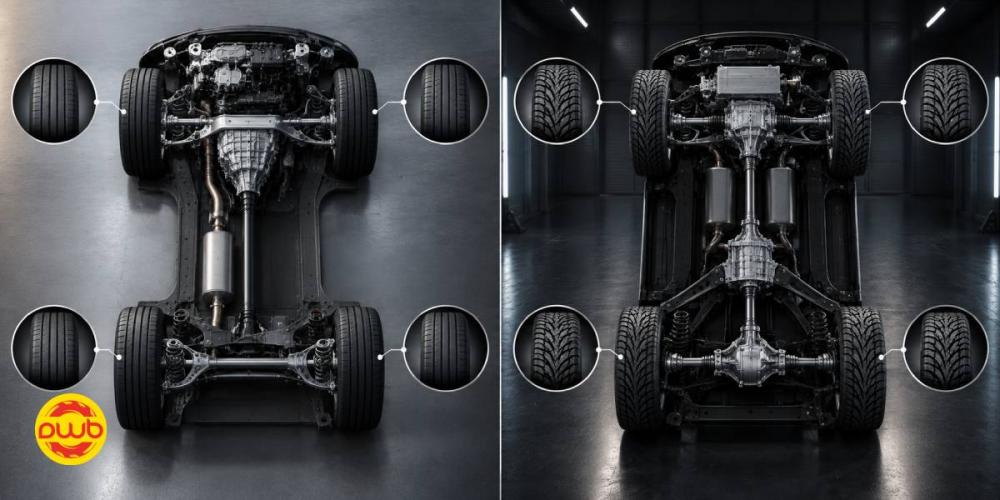
It is generally better not to mix tires designed for different seasons.
Summer and winter tires use different tread designs and rubber compounds to perform in different temperature and road conditions.
Putting one type on the front axle and another on the rear can change the balance of available grip between the two ends of the vehicle.
Michelin specifically advises against mixing seasonal tire types between the front and rear because they can behave differently as road and weather conditions change.
For normal UAE driving, this is rarely a practical issue because dedicated winter tires are generally unnecessary for local road conditions. The more important point is to use four tires suited to the vehicle and its normal operating environment.
This is one of the most important exceptions to understand.
If your vehicle has AWD or 4WD, do not assume that different tires are acceptable simply because they are fitted on different axles.
AWD systems can be sensitive to differences in tire rolling circumference. If the tires rotate at different rates because their effective diameters are different, the drivetrain may have to compensate continuously.
Depending on the vehicle's design, excessive differences can place additional stress on the drivetrain or interfere with the way the system distributes torque.
Michelin specifically warns that incorrect rolling circumferences on 4x4 vehicles can interfere with differential operation and stresses following the vehicle manufacturer's tire recommendations.
This means that for an AWD vehicle, you should check the manufacturer's permitted tread-depth or circumference difference before replacing even one tire.
Do not rely only on tire size.
Brand is only one part of the equation.
Before mixing or replacing tires, check the complete specification.
The width, aspect ratio and wheel diameter must be appropriate for the vehicle.
The tire must be capable of carrying the required vehicle load.
The speed rating should meet the vehicle manufacturer's requirement.
The tire construction must be compatible with the vehicle.
Different tread designs can behave differently during braking, cornering and wet-road driving.
This becomes particularly important on AWD and 4WD vehicles.
Continental recommends matching size, tread pattern, load index and speed rating and advises drivers to follow the vehicle manufacturer's specifications.
Read More: How to Read Tire Markings
Yes.
If you have the choice, four matching tires are normally the preferred setup.
Using the same brand and model on all four wheels gives the vehicle a more consistent combination of:
Continental recommends fitting the same tires across every wheel position where possible, while Michelin also recognises that some front/rear combinations can be acceptable when properly specified.
So there is an important distinction:
Different tires can sometimes work on the same car. Matching tires are generally the better choice.
Two tires can have the same size marking but different tread designs and construction characteristics.
Size is necessary, but it is not the only specification that matters.
This creates the greatest concern because the left and right tires should respond consistently.
A brand-new tire beside a heavily worn tire can behave differently even when both tires are the same size.
It is actually the opposite in many cases.
AWD systems can be more sensitive to differences in rolling circumference, so the manufacturer's requirements need to be checked carefully.
The condition of the tire on the opposite side of the axle should be checked before deciding whether one tire is enough.
A cheaper tire is not necessarily a problem, but it must still meet the vehicle's required size, load and speed specifications.
Check your tire size, tread condition and vehicle requirements before replacing one or two tires.
If all four tires are worn, replacing all four with the same model is usually the simplest solution.
If only two tires need replacing, use the same tire model as a pair whenever possible and have the remaining tires inspected.
If only one tire is damaged, compare its condition and tread depth with the tire on the opposite side before buying a replacement.
For AWD and 4WD vehicles, check the manufacturer's requirements before replacing one or two tires.
DWB Tyres offers car tyre service including tire fitting, replacement, rotation, balancing, alignment, tire pressure checks and tread inspection. The service team can assess the existing tires before recommending replacement.
Quick answers to common questions about different tire brands, tire replacement and mixing tires on the same vehicle.
Different tire brands can sometimes be used on the same vehicle, particularly when different brands are fitted to the front and rear axles. However, matching tires are preferred, and the tire size, load index, speed rating and other vehicle requirements must be correct.
It is generally not recommended. The two tires on the same axle should ideally match in brand, model, size, tread pattern, construction, load index and speed rating so that both sides of the vehicle behave consistently.
Sometimes. If the tire on the opposite side of the axle has similar tread depth, age and condition, replacing one damaged tire may be possible. If there is a significant difference in wear, replacing both tires on the axle may be the better option.
Replacing tires in pairs is generally preferred when two tires on the same axle need replacement. Using the same tire model as a pair helps maintain more consistent grip, tread characteristics and handling.
Yes, if the vehicle was designed and approved to use different front and rear tire sizes. Some vehicles have staggered fitments from the factory. Do not change tire sizes without checking the vehicle manufacturer's specifications.
Mixing different seasonal tire types is generally not recommended because their compounds and tread designs are intended for different conditions. They can provide different levels of grip and handling depending on temperature and road conditions.
AWD and 4WD vehicles can be particularly sensitive to differences in tire rolling circumference. Before replacing one or more tires, check the vehicle manufacturer's requirements for tire size, tread-depth differences and allowable circumference differences.
Yes. Four matching tires generally provide the most consistent handling, braking and grip. If replacing all four tires is practical, using the same brand and model is usually the simplest option.