Search Tyre
September 21, 2026
Pirelli vs Bridgestone Tyres: Which One Is Better?
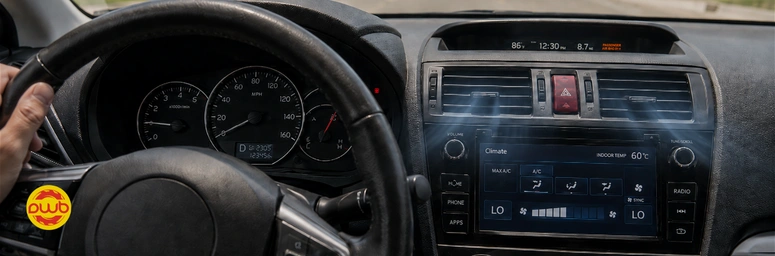
If your car AC is not blowing cold air, the problem is usually somewhere in the refrigerant, compressor, condenser, cooling fan, airflow system, or electrical controls. One useful clue is how the AC behaves while you drive. For example, if the air feels warm while the car is idling but becomes noticeably colder when you accelerate or start moving, I would first suspect poor airflow across the condenser, a weak condenser fan, low refrigerant pressure, or a compressor that is not performing efficiently at low engine speed. If the air stays warm even at highway speed, the cause is more likely to be low refrigerant, a compressor problem, a blocked expansion valve, or another fault inside the AC system.
The exact symptom matters because a car AC system depends on several components working together. The compressor circulates refrigerant, the condenser releases heat, the fans provide airflow when the vehicle is stationary, and the cabin filter allows cooled air to reach the interior. A fault in any one of these areas can leave you with weak or warm airflow.
In this guide, we will look at the most common reasons for a Car AC Not Blowing Cold Air, how different symptoms can point toward different faults, and which problems usually require professional inspection rather than simply adding more refrigerant.
| What You Notice | Possible Cause |
|---|---|
| AC gets colder when driving faster | Weak condenser fan, poor condenser airflow, or low refrigerant |
| AC is warm at idle but cold when moving | Condenser fan issue or weak compressor performance at low RPM |
| Airflow from the vents is weak | Dirty cabin filter, blower motor issue, or blocked airflow |
| Airflow is strong but the air is not cold | Low refrigerant, compressor fault, or expansion valve problem |
| AC becomes cold and then warm again | Pressure sensor, compressor clutch, or refrigerant pressure issue |
| One side of the cabin is colder than the other | Blend door actuator or climate-control system fault |
Once the symptoms are clear, the next step is to identify which part of the system is failing. A Car AC Not Blowing Cold Air problem is rarely caused by one universal fault, and the way the system behaves can often narrow the diagnosis before any parts are replaced.
Low refrigerant is one of the most common causes. Refrigerant does not normally disappear on its own, so a low level usually points to a leak from a hose, seal, condenser, evaporator, or service connection. Simply recharging the system may make the AC cold again temporarily, but the leak should be located and repaired first.
A weak or failed condenser fan is more noticeable when the vehicle is stationary. The condenser relies on airflow to release heat from the refrigerant. While driving, outside air passes through it naturally, which explains why the AC may become colder as the vehicle gains speed. If this happens, the fan motor, relay, fuse, wiring, and fan control system should be checked.
Compressor faults produce a different pattern. A worn compressor, damaged clutch, faulty control valve, or incorrect system pressure can prevent refrigerant from circulating properly. If the vents blow strongly but the air remains warm, compressor pressure testing is usually necessary.
Poor airflow can also come from a heavily blocked cabin filter or weak blower motor. In that case, the system may still be producing cold air, but not enough of it reaches the cabin. Replacing the filter or repairing the blower can restore normal airflow without opening the refrigerant circuit.
The important point is to diagnose the failed component before replacing parts. A proper pressure, temperature, airflow, and electrical check is far more useful than repeatedly adding refrigerant and hoping the problem disappears.
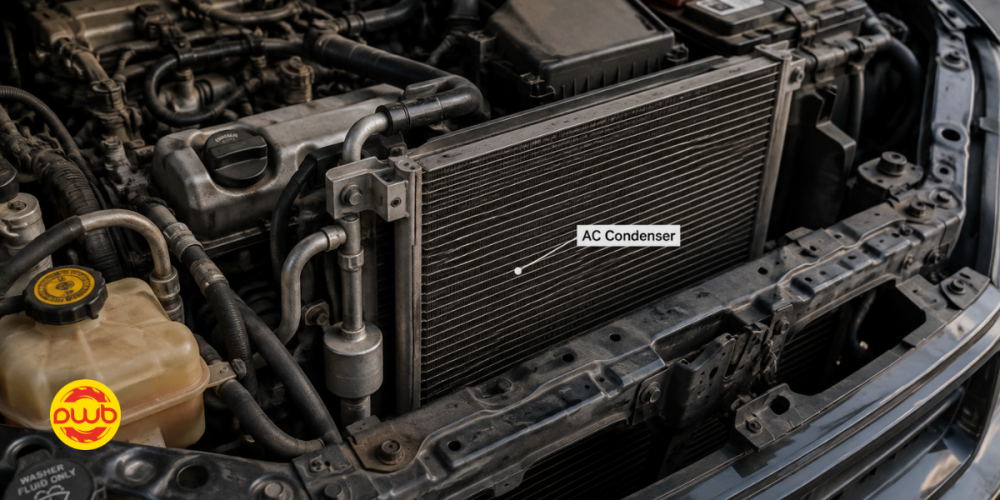
When a Car AC Not Blowing Cold Air problem becomes persistent, the components that deserve the closest attention are the compressor, condenser, condenser fan, and refrigerant circuit. These parts handle pressure, heat transfer, and refrigerant circulation, so a fault in any of them can reduce cooling quickly and may lead to a more expensive repair if ignored.
The compressor is particularly important because it keeps refrigerant moving through the system. Low refrigerant, incorrect lubrication, internal contamination, or prolonged operation with an existing AC fault can contribute to compressor damage. HELLA lists insufficient cooling, abnormal noise, leaks, and stored fault codes among common signs of compressor failure, while DENSO recommends checking refrigerant quantity, leaks, fan operation, and system pressures before deciding that the compressor itself needs replacement.
The condenser and its cooling fan are also under considerable thermal load. The condenser must release heat from the high-pressure refrigerant, and airflow from the fan becomes especially important when the vehicle is stopped or moving slowly. A contaminated condenser or failed fan can therefore explain why the AC feels warmer in traffic but improves once the car is moving.
How the vehicle is used can make an existing weakness easier to notice. Long periods of idling in hot weather, dusty driving conditions, and postponing service when cooling performance starts to drop can place greater demands on an already weakened system. If the problem continues, a proper Car AC Repair in Dubai should include pressure testing, leak detection, condenser airflow checks, and electrical diagnosis rather than automatically replacing parts or simply adding refrigerant. DENSO specifically recommends combining leak-detection methods and testing fan operation and airflow during AC diagnosis.
The way your AC behaves can provide useful clues about the fault. Compare the symptom you notice with the likely cause and the next check that usually makes sense.
Extra airflow while the car is moving helps the condenser release heat, but cooling drops again when the vehicle stops.
The blower is working, but the AC system may not be producing enough cooling inside the refrigerant circuit.
Cooling may still be taking place, but restricted airflow prevents enough conditioned air from reaching the cabin.
Intermittent cooling can appear when compressor engagement or refrigerant pressure changes unexpectedly while the system is running.
Get the system checked before a small cooling issue develops into a more expensive AC repair.
A Car AC Not Blowing Cold Air problem does not always mean the entire AC system needs replacing. In many cases, the fault can be repaired once the exact cause is identified. Some basic checks can even be done before visiting a workshop. You can inspect the cabin filter if airflow has become weak, check whether the AC-related fuse has blown, look for obvious debris blocking the condenser, and listen to whether the cooling fan starts when the AC is switched on.
The situation changes when the vents produce normal airflow but the air stays warm. Low refrigerant, leaks, compressor problems, pressure sensor faults, or damaged electrical components require proper diagnostic equipment. Refrigerant systems operate under pressure, so repeatedly adding gas without finding the leak is not a reliable repair and can leave the same problem returning a short time later.
A leaking hose or seal can usually be repaired or replaced without changing the whole system. A faulty condenser fan may only require a fan motor, relay, or wiring repair. Compressor damage can be more involved, particularly if internal wear has contaminated the refrigerant circuit, but even then the correct decision should come after pressure and system testing rather than guesswork.
For drivers who have already checked the simple causes and still have a Car AC Not Blowing Cold Air, a workshop inspection is usually the sensible next step. At DWB Tyres, the AC system can be checked for refrigerant pressure, leaks, compressor operation, condenser airflow, and electrical faults so the repair is based on the actual problem instead of replacing parts unnecessarily.
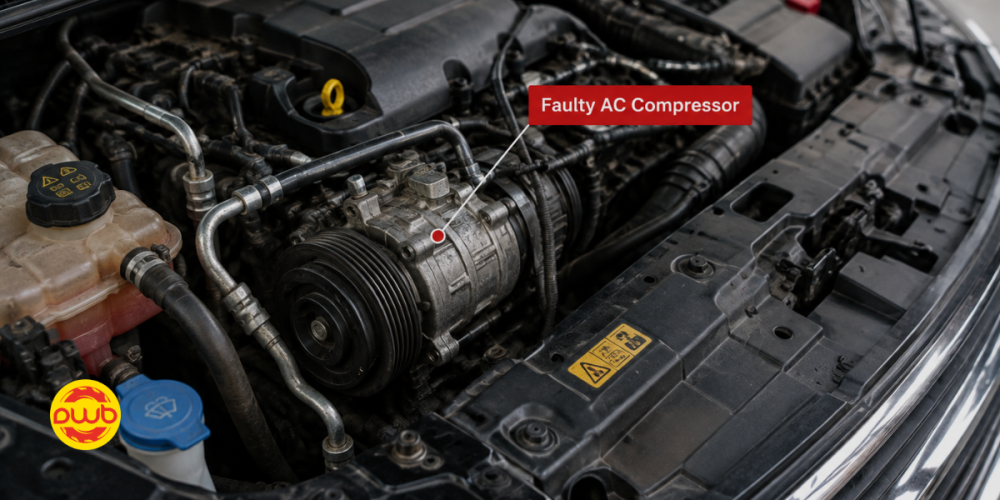
When your Car AC Not Blowing Cold Air problem starts, the most useful approach is to pay attention to exactly how the system behaves before assuming a major component has failed. If the AC becomes colder once the car is moving, the condenser fan or airflow around the condenser deserves attention. If the vents blow strongly but the air stays warm at every speed, low refrigerant, a leak, compressor trouble, or a pressure-control fault becomes more likely.
The main lesson is that a Car AC Not Blowing Cold Air issue is usually repairable, but the correct repair depends on identifying the failed part first. Replacing parts by guesswork can increase the cost without solving the original problem. A careful inspection of refrigerant pressure, airflow, compressor operation, fan performance, and electrical controls gives a much clearer answer and helps restore reliable cooling without unnecessary work.
Common questions drivers ask when their car AC stops cooling properly or only works under certain driving conditions.
If the airflow is strong but the air is warm, the problem may be low refrigerant, a refrigerant leak, a weak compressor, a blocked condenser or a pressure-control fault. A pressure and temperature test can usually narrow down the exact cause.
This often points to an airflow problem around the condenser. When the car moves, outside air helps cool the condenser. If cooling becomes weak again while idling, the condenser fan, fan relay, wiring or condenser airflow should be inspected.
No. Low refrigerant is only one possible cause. Compressor faults, cooling fan problems, electrical failures, pressure sensors, blocked airflow and expansion valve issues can produce similar symptoms. Refrigerant should not be added before the system is properly checked.
In many cases the vehicle can still be driven, but the cause matters. If the AC problem appears together with engine overheating, abnormal noises, a burning smell or cooling-fan failure, the vehicle should be inspected promptly because the fault may involve more than cabin cooling.
You can check simple items such as the cabin filter, visible condenser blockage and relevant fuses. Refrigerant leaks, compressor faults, pressure problems and electrical diagnosis are better handled by a workshop with the correct AC testing equipment.