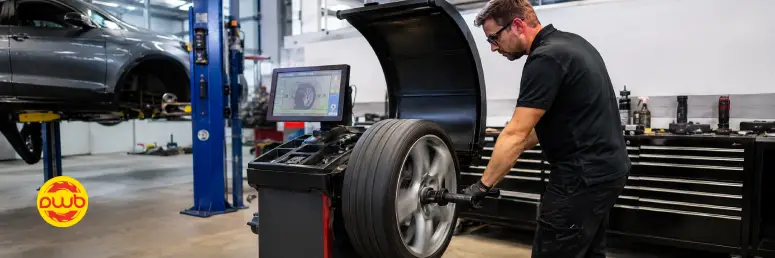
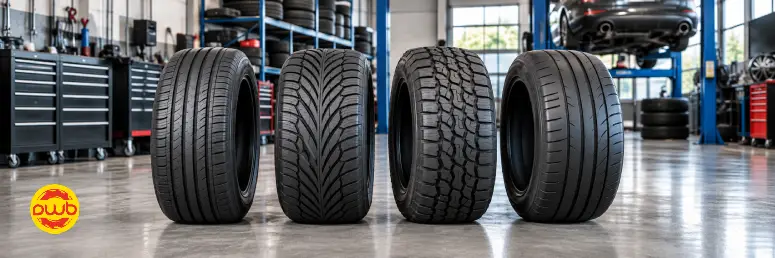
Michelin and Continental both identify speed-related vibration as a typical sign of tyre/wheel imbalance, while Continental notes that the vibration may be transmitted through different areas of the vehicle depending on the affected wheel.
Why Does My Car Vibrate at 100–120 km/h?
A vibration that becomes noticeable only around 80–120 km/h strongly justifies checking wheel and tyre balance first.
A small imbalance may be difficult to notice at city speeds. As rotational speed increases, the imbalance can produce a stronger repeating force and the vibration becomes easier to feel.
Continental specifically identifies steering-wheel vibration around 80–120 km/h as a common symptom of unbalanced tyres. Michelin also explains that an unbalanced tyre/wheel assembly can bounce or wobble as it rotates.
However, speed-specific vibration does not prove that balancing is the only problem.
A damaged tyre, bent wheel, irregular tread or mechanical looseness can produce a similar symptom.
That is why a good inspection should not stop simply because the balancing machine finds an imbalance.
What Are the Most Common Causes of High-Speed Vibration?
1. Wheel and Tyre Imbalance
This is one of the first things to investigate when the vibration:
- appears mainly as speed increases;
- is strongest within a particular speed range;
- started after new tyres were installed;
- or can be felt through the steering wheel, seat or floor.
A wheel and tyre assembly is balanced by correcting differences in weight distribution around the rotating assembly.
If that balance is incorrect, the wheel can generate a repeating vibration as rotational speed increases. Michelin notes that imbalance can create bouncing or wobbling and add stress to steering and suspension components.
DWB already has a detailed guide explaining wheel alignment and wheel balancing.
But remember:
Balancing fixes a weight-distribution problem. It does not repair a damaged tyre or bent wheel.
2. A Damaged or Deformed Tyre
A wheel can be perfectly balanced on the machine while the tyre itself still has a physical problem.
Possible issues include:
- a bulge;
- internal tyre damage;
- flat spotting;
- abnormal tread deformation;
- severe uneven wear;
- or excessive tyre runout.
Michelin notes that flat spotting can produce vehicle vibration, while Goodyear advises that a new or sudden vibration can indicate tyre damage or another mechanical issue.
A tyre should therefore be inspected physically, not diagnosed from balancing numbers alone.
Do not continue high-speed driving with a tyre that has a visible bulge or structural damage.
If inspection shows that the tyre is no longer serviceable, a suitable replacement can be found through DWB's car tyres online section.
3. A Bent or Damaged Rim
A strong pothole impact or kerb strike can deform a wheel without creating an immediately obvious crack.
Even a moderate wheel deformation can prevent the assembly from rotating concentrically.
The result may be:
- steering-wheel vibration;
- body vibration;
- repeated tyre pressure problems;
- or difficulty achieving a smooth balance.
Goodyear notes that a moderately bent wheel can produce vibration after pothole damage.
If vibration started soon after hitting a deep pothole or kerb, ask the technician to inspect wheel runout, not just rebalance the tyre.
4. Uneven or Cupped Tyre Wear
Look carefully across the entire tread.
If some areas are lower than others or the tread has a scalloped pattern, the tyre may no longer roll smoothly.
Cupping can be associated with wheel imbalance or worn suspension components. Worn shocks and struts can allow excessive wheel movement and contribute to this irregular wear pattern.
Once severe wear has developed, correcting the original mechanical problem may prevent further damage, but it cannot restore rubber that has already worn away.
This is one reason tyre condition must be checked alongside balancing.
Can Wheel Alignment Cause High-Speed Vibration?
It can contribute, but alignment is not the first explanation for every speed-specific vibration.
This distinction matters.
Wheel alignment primarily controls the angles at which the wheels operate relative to the road and vehicle.
Typical alignment symptoms include:
- the vehicle pulling to one side;
- an off-centre steering wheel;
- uneven tyre wear;
- or abnormal handling.
Continental lists these among common alignment symptoms. Michelin's diagnostic guidance also distinguishes a speed-specific vibration, which points toward imbalance, from a consistent pull, which points more strongly toward alignment.
Misalignment can still contribute indirectly.
For example:
Poor alignment → irregular tyre wear → tyre no longer rolls evenly → vibration becomes noticeable.
Wheel Balancing vs Wheel Alignment for Vibration
Can Worn Suspension Parts Cause Vibration at High Speed?
Yes.
The suspension has to control wheel movement while keeping the tyre in stable contact with the road.
Problems involving components such as shocks, struts, mounts, bushings or related steering parts can therefore contribute to vibration or poor high-speed stability.
Monroe notes that steering-wheel vibration on a smooth road can be associated with worn shocks, struts or steering components. Worn shocks can also allow the tyre to bounce and contribute to cupped tread wear.
Suspension becomes more important to investigate when vibration is accompanied by:
- bouncing after bumps;
- knocking or clunking;
- uneven tyre wear;
- loose or vague steering;
- unusual body movement;
- or instability on a smooth road.
DWB's car suspension repair service can be linked here when the inspection moves beyond tyres and wheels.
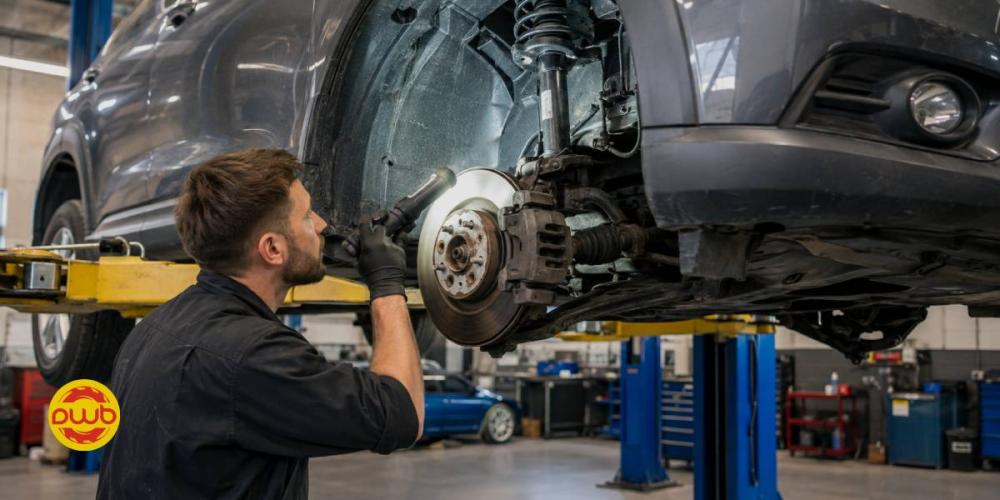
Can Loose Wheel Nuts Cause the Car to Shake?
Yes, and this requires urgent attention.
A wheel that is not correctly secured to the hub can wobble or shake while the vehicle is moving.
Continental notes that loose wheel fasteners can cause vibration through the steering wheel, seat or floor and that the symptom may become noticeable at higher speed.
This is particularly important if the vibration started shortly after:
- tyre replacement;
- wheel removal;
- brake work;
- wheel rotation;
- or other work that required removing the wheel.
Do not simply continue driving at highway speed to see whether the vibration becomes worse.
If there is any reason to suspect wheel looseness, stop safely and have the wheel installation checked.
Why Does My Steering Wheel Shake at High Speed?
If the steering wheel is where you feel the vibration most strongly, the front wheel and tyre assemblies deserve early attention.
A technician should check:
- Front wheel balance
- Front tyre condition
- Tyre runout
- Wheel/rim runout
- Hub mounting
- Steering and suspension components
The exact location of the vibration does not prove the diagnosis, but it helps decide where inspection should begin.
Continental notes that tyre imbalance can be transmitted through the steering wheel, seat or floor depending on which tyres are affected.
Why Does the Seat or Floor Vibrate at High Speed?
When the steering wheel remains relatively calm but the vibration is clearly felt through the seat, floor or body, rear tyre/wheel assemblies are among the areas to inspect.
But do not automatically order rear-wheel balancing without diagnosis.
Body vibration can also come from mechanical or driveline components.
A good workshop should first determine whether the vibration follows:
- vehicle speed;
- engine RPM;
- acceleration/load;
- or braking.
That distinction significantly narrows the diagnosis.
Why Does My Car Vibrate Only When Accelerating?
If the vibration depends mainly on acceleration rather than road speed alone, wheel balance may not be the whole explanation.
Driveline problems can produce vibration under load. Dana/Spicer technical guidance, for example, explains that incorrect driveline operating angles can create vibration.
The technician therefore needs to know whether:
- vibration begins at the same speed every time;
- it becomes stronger only when the accelerator is pressed;
- it disappears when you lift off the accelerator;
- or it follows engine RPM even when road speed changes.
These details are more useful than simply telling the garage:
“My car shakes.”
Why Does My Car Vibrate Only When Braking at High Speed?
A vibration that appears mainly when the brake pedal is applied should be diagnosed differently from a constant highway-speed vibration.
Brake components become much more relevant.
Possible areas to inspect include:
- brake disc condition;
- disc runout or thickness variation;
- caliper operation;
- hub condition;
- wheel bearing play;
- and related suspension components.
Brake pulsation and vibration while braking are recognised symptoms of brake-system problems.
DWB already has a dedicated guide on brake disc skimming vs replacement, which can be linked naturally here rather than repeating the entire brake-disc discussion.
If the car is smooth at 120 km/h until you touch the brake pedal, do not automatically blame wheel balancing.
Can Tyre Pressure Cause High-Speed Vibration?
Incorrect tyre pressure should always be checked, but it is not the most specific explanation for a vibration that appears only within a narrow speed range.
Low or unequal pressure can change:
- tyre deformation;
- handling;
- steering response;
- tyre temperature;
- and wear patterns.
But if the car consistently becomes smooth at lower speeds and starts shaking around a particular highway speed, tyre/wheel balance, tyre condition and wheel runout deserve close attention.
Pressure should still be measured before further diagnosis because inspecting tyres without first confirming their basic condition can lead to the wrong conclusion.
DWB's car-service page lists pressure checks, tyre balancing, wheel alignment and tread inspection among its tyre services.
Why Did My Car Start Vibrating After New Tyres?
A car should not develop a persistent high-speed vibration simply because new tyres were fitted.
If the vibration started immediately after tyre installation, check:
Wheel Balance
The new tyre/wheel assemblies may need rebalancing.
Tyre Seating
The tyre should be properly seated and centred on the wheel.
Wheel Mounting
The wheel must sit correctly against the hub.
Wheel Fasteners
Correct wheel installation and fastening should be verified.
Tyre or Wheel Runout
A balancing machine can correct weight imbalance, but it cannot make a physically deformed tyre or wheel round.
Michelin recommends balancing tyres when they are first mounted or remounted after repair.
If the vibration began immediately after tyre service, tell the technician that specifically. The timing of the symptom is diagnostically useful.
Why Did the Vibration Start After Hitting a Pothole?
A pothole can affect more than wheel alignment.
After a hard impact, inspect for:
- tyre sidewall damage;
- internal tyre damage;
- bent wheel/rim;
- pressure loss;
- alignment changes;
- suspension damage.
Goodyear notes that pothole impacts can bend wheels and produce vibration, while Monroe recommends suspension and alignment inspection after significant pothole damage when symptoms appear.
If the vibration appeared immediately after a pothole impact, simply balancing the wheel without inspecting the tyre and rim can miss the actual fault.
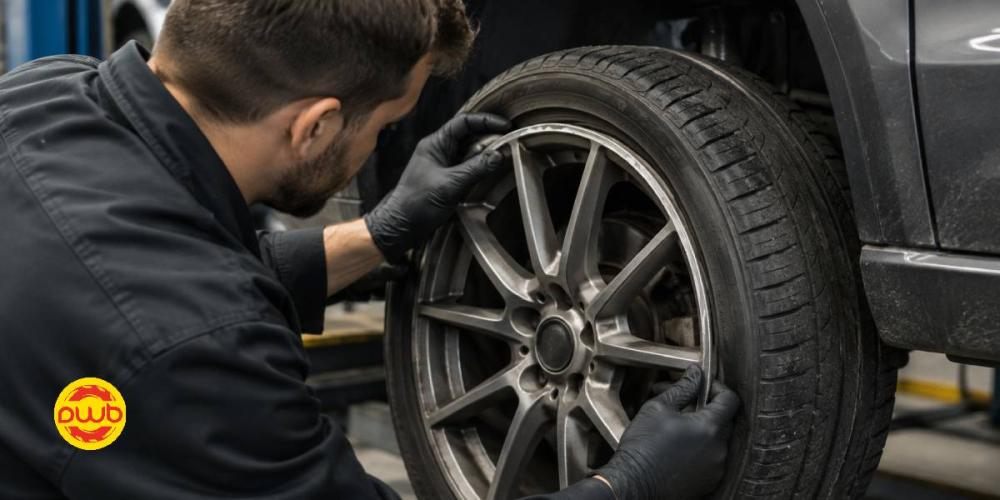
What Should a Garage Check for High-Speed Vibration?
A proper diagnosis should be systematic.
Step 1: Road Test the Vehicle
Record:
- the speed where vibration begins;
- where it is felt;
- whether acceleration changes it;
- whether braking changes it;
- and whether the road surface affects it.
Step 2: Check Tyre Pressure
Verify all tyres before diagnosing more complex problems.
Step 3: Inspect the Tyres
Look for:
- bulges;
- cuts;
- punctures;
- flat spots;
- cupping;
- abnormal wear;
- and tread deformation.
Step 4: Check Wheel Balance
Measure imbalance using appropriate wheel-balancing equipment.
Step 5: Check Tyre and Wheel Runout
A tyre or rim that does not rotate true may continue to vibrate even after balancing.
Step 6: Inspect Wheel Mounting
Check hub seating and wheel fasteners.
Step 7: Check Alignment and Suspension
Especially if there is:
- uneven wear;
- pulling;
- steering looseness;
- or evidence of pothole impact.
Step 8: Check the Brake System if Vibration Occurs During Braking
Do not diagnose braking vibration as a simple balancing issue.
Step 9: Extend Diagnosis if the Vibration Is Load-Dependent
If the wheels and tyres are normal but vibration appears mainly under acceleration, driveline diagnosis may be necessary.
For the tyre-related part of this inspection, DWB provides car tyre services in UAE, including balancing, alignment, pressure and tyre-condition checks. The wider DWB car-service page also lists tyre and suspension services.
Is It Safe to Drive When the Car Vibrates at High Speed?
Do not keep increasing your speed to test how bad the vibration becomes.
A mild vibration may come from wheel imbalance, but the same general symptom can also occur with a damaged tyre, bent wheel or loose wheel hardware.
Reduce speed and arrange inspection.
Stop driving as soon as it is safe if:
- the vibration suddenly becomes severe;
- the steering becomes difficult to control;
- the car begins pulling strongly;
- a tyre has a visible bulge;
- a tyre is rapidly losing pressure;
- you hear heavy thumping;
- the wheel appears loose;
- or the vibration started immediately after a major impact.
Goodyear advises that a sudden ride disturbance or vibration can indicate tyre damage or another mechanical problem that should be inspected.
Car Vibrating at High Speed? Get the Cause Checked
Do not replace tyres, request alignment or rebalance the wheels based on guesswork.
 Search Tyre