Search Tyre
September 21, 2026
Pirelli vs Bridgestone Tyres: Which One Is Better?
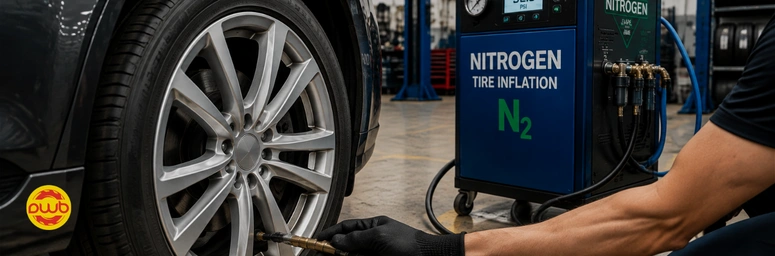
For most drivers in the UAE, regular air is enough as long as tyre pressure is checked and maintained correctly. Nitrogen is not a replacement for proper tyre care, but it can be a better option for specific situations such as long-distance driving, performance vehicles or drivers who want more stable tyre pressure in changing temperatures.
Because UAE heat can increase tyre pressure changes during driving, understanding the difference between nitrogen vs air in tyres UAE helps you decide whether paying extra for nitrogen provides a real benefit for your vehicle or not. This guide explains where nitrogen makes a difference, where regular air is the smarter choice, and what matters most for tyre safety and performance.
This guide explains the real differences between nitrogen and regular air, when nitrogen is worth considering, and what UAE drivers should know before choosing between them.
| Driving Condition | More Suitable Option |
|---|---|
| Daily city driving in Dubai or Abu Dhabi | Regular air with regular pressure checks |
| Long highway journeys and frequent driving | Nitrogen can help maintain pressure stability |
| Performance or premium vehicles | Nitrogen may provide an extra advantage |
Choose based on your driving style, not just the tyre filling option.
The main difference between nitrogen and regular air in car tyres is how they handle pressure changes caused by temperature. In the UAE, where summer temperatures and hot road surfaces can significantly increase tyre heat, maintaining the correct tyre pressure is essential for safety, tyre life and fuel efficiency.
Nitrogen contains less moisture than regular compressed air, which means it is less affected by temperature changes and can help maintain a more stable tyre pressure over longer periods. This can be useful for drivers who regularly travel on highways, drive long distances or use vehicles where consistent tyre pressure is important.
Regular air, on the other hand, is still a practical and reliable option for most drivers in Dubai and Abu Dhabi. Since regular air is easily available everywhere, maintaining the recommended tyre pressure through regular checks often provides the same real-world benefits for everyday city driving.
The key difference is not that nitrogen makes tyres automatically better. Instead, nitrogen can reduce pressure fluctuations, while regular air offers convenience and lower maintenance costs. For most UAE drivers, checking tyre pressure regularly according to the vehicle manufacturer’s recommendation has a bigger impact than choosing between nitrogen and air.
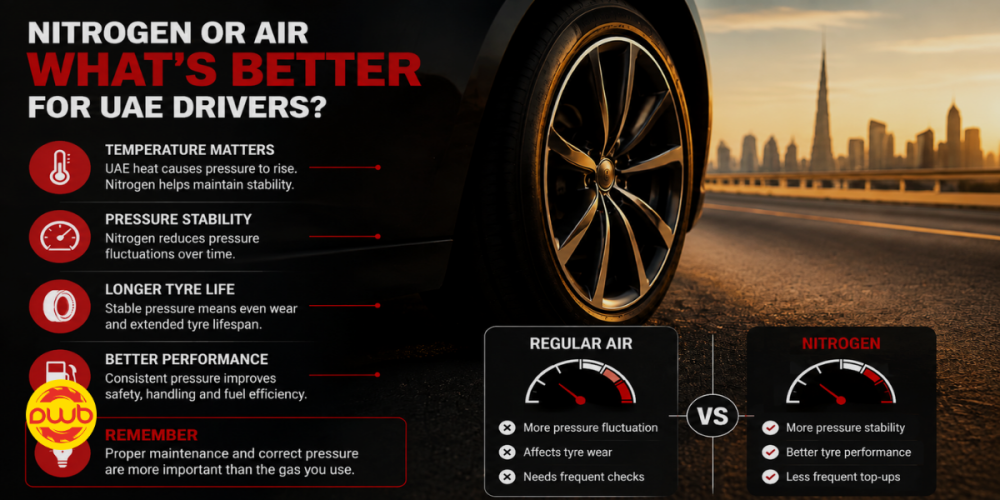
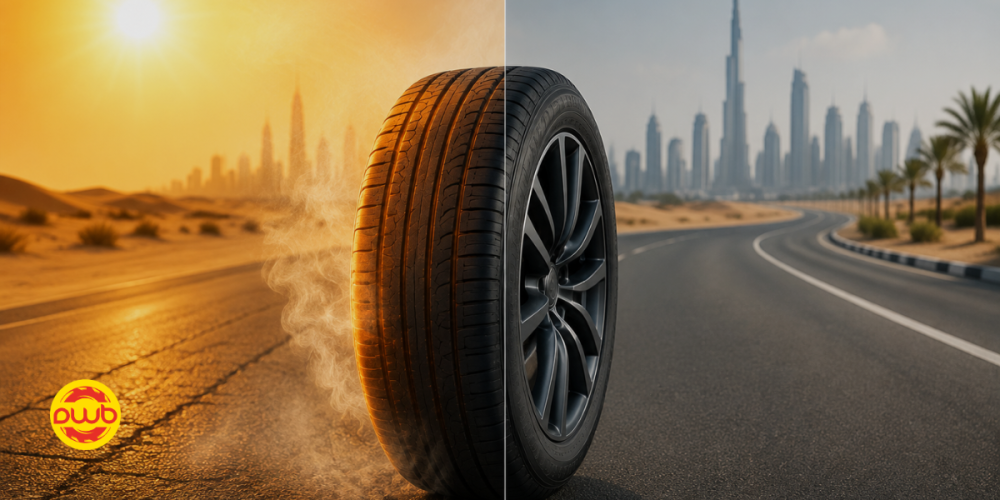
The biggest challenge for car tyres in Dubai is not simply the choice between nitrogen and regular air, but how extreme heat affects tyre pressure during daily driving. When temperatures rise, the air inside the tyre expands, which can increase pressure while driving. Over time, repeated pressure changes can affect tyre wear, handling and overall tyre performance.
For drivers in Dubai, checking tyre pressure when tyres are cold is one of the most important maintenance steps. A tyre that is overinflated may have reduced contact with the road, while an underinflated tyre creates more rolling resistance, increases fuel consumption and can wear faster on the edges.
Nitrogen can help reduce some pressure fluctuations because it expands more consistently with temperature changes, but it does not remove the need for regular inspections. Whether you use nitrogen or regular air, professional checks from a reliable Car Tyre Service in Dubai can help identify pressure issues, uneven wear and other tyre problems before they become safety concerns.
This is especially important for vehicles that regularly travel on highways, carry heavier loads or operate during the hottest months of the year, when tyres experience higher stress from both road temperature and driving conditions.
Nitrogen is often promoted as a better option for car tyres, especially in hot climates like the UAE. The main reason is that nitrogen molecules are less affected by temperature and pressure changes compared with the moisture-containing air usually used to inflate tyres. However, the practical benefits depend on how and where the vehicle is used.
One of the main advantages of nitrogen is better pressure stability. During long drives or extreme heat conditions, tyre temperature increases and pressure changes naturally. Nitrogen can help reduce the amount of pressure fluctuation, which may help the tyre maintain more consistent contact with the road. Another benefit is that nitrogen contains very little moisture compared with normal compressed air. Moisture inside a tyre can contribute to pressure changes as temperatures rise and fall. By reducing this factor, nitrogen can provide more predictable tyre pressure over time.
However, nitrogen is not a replacement for regular tyre maintenance. A nitrogen-filled tyre can still lose pressure through small leaks, valve issues or normal tyre permeability. Drivers still need to check pressure regularly and adjust it according to the vehicle manufacturer’s recommendation.
For most daily drivers in Dubai, the biggest advantage of nitrogen appears when the vehicle experiences more demanding conditions, such as frequent highway driving, long-distance trips, heavy loads or performance-focused driving. For normal city use, maintaining the correct tyre pressure remains the most important factor for safety and tyre life.
For most drivers in Dubai and the UAE, regular air is the better practical choice if you regularly check and maintain the correct tyre pressure. It is easily available, costs less and provides reliable performance for normal city driving.
Nitrogen becomes a more suitable option when your driving conditions are more demanding. If you frequently drive long distances, spend more time on highways, use a performance vehicle or want to reduce pressure fluctuations caused by extreme heat, nitrogen can provide an additional benefit.
The important point is that nitrogen does not make a poorly maintained tyre safer. A tyre with the correct pressure using regular air will perform better than a nitrogen-filled tyre with incorrect pressure.
For most everyday UAE drivers, investing in regular tyre inspections, correct pressure adjustment and professional tyre care from DWB Tyres will have a bigger impact on tyre safety and lifespan than switching from air to nitrogen. Proper maintenance, including regular checks and expert advice based on your driving conditions, helps ensure your tyres perform reliably in UAE weather.
Practical answers for UAE drivers who want to know whether nitrogen inflation is actually better, when it matters, and when regular air is enough.
Nitrogen can be better in UAE heat because it helps tyre pressure stay more stable, especially during long drives and high road temperatures. However, for most everyday drivers, regular air is still a good option if tyre pressure is checked and adjusted on time.
If your driving is mostly short city trips and you already check tyre pressure regularly, nitrogen usually does not create a major real-world advantage. It becomes more worthwhile for highway driving, heavy use, performance vehicles or drivers who want more stable pressure over time.
Yes, you can top up nitrogen-filled tyres with regular air if needed. It will reduce the purity of the nitrogen, but it is still better to maintain the correct pressure than to drive with underinflated tyres. Safety and correct pressure matter more than keeping the fill 100% nitrogen.
Nitrogen may help slightly by improving pressure stability, which can support more even tyre wear. But tyre lifespan still depends much more on correct inflation, wheel alignment, driving style, rotation intervals and road conditions. Nitrogen helps, but it does not replace proper tyre care.
In the UAE, tyre pressure should usually be checked at least once every two weeks and before longer trips. During hotter months or if you drive frequently on highways, checking weekly is safer. This applies whether your tyres are filled with nitrogen or regular air.